
What is a particle detector?
This page describes a cloud chamber particle detector I put together. The principle is to make a see-through box with an atmosphere super saturated with isopropyl alcohol. High-energy particles passing through the box leave trails of ions which act as nucleation sites allowing the IPA to condense.
How to make one
The challenging bit to make a cold plate. This needs to be about -20C in order to generate a super saturated layer above it. I used 12 x 60W Peltier units arranged in 2 layers under a copper plate. These draw 6A @12V each so needing 72A or 865W.
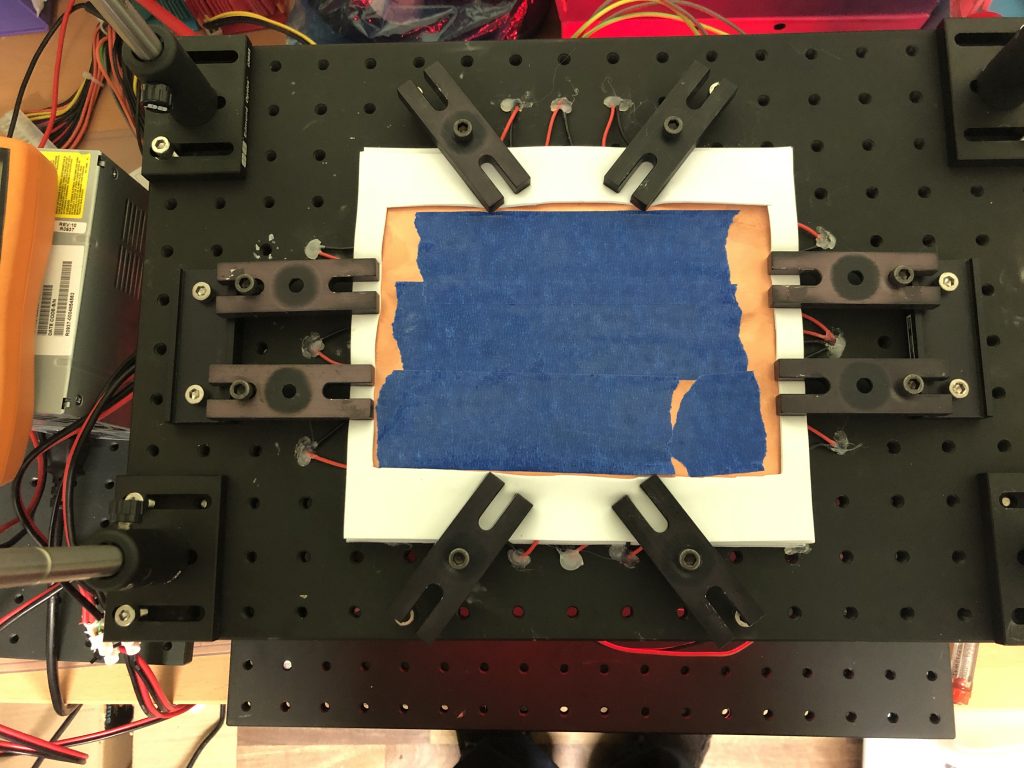
Next biggest challenge is getting rid of the waste heat. I did try air cooling with CPU heatsinks but always found the hot side started to warm. The answer was to switch to water cooling using an array of 40x200mm blocks, pump and a large radiator with fans.
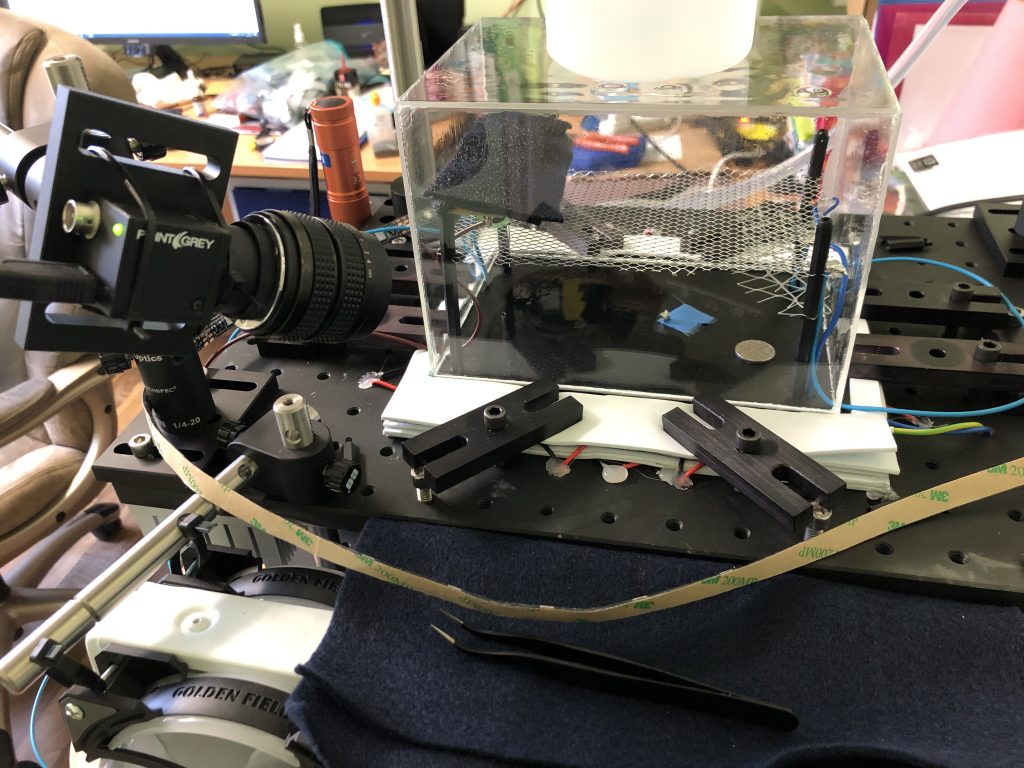
Above is the set up used to take the video at top of page. The copper plate is covered with black vinyl to make the tracks easier of see. Above that we have a wire mesh. If you remember the energetic particles cause trails of ions in the atmosphere. If these trails occur in the 1cm or so above the cold plate we see the condensation. By applying ~4000V to the mesh relative to the copper plate we encourage the trails of ions to migrate to the super saturated layer. The 4000V power supply and mesh can be obtained from a fly swatter. Finally above the mesh we have some cloth sitting on a resister. This is soaked in IPA and warmed with the resister so evaporating and saturating the atmosphere in the box.
The picture above shows LEDs being used for illumination. I later changed these for lasers with hologram gratings projecting a line. These were then shone just over the top of the cold pate so illuminating and condensation trails.
| CLOUD CHAMBER | IN USE |
|---|---|
| COLD PLATE | 12 x 60W Peltier units arranged in 2 layers under a copper plate · about -20C |
| DRAW | 6A @12V each so needing 72A or 865W |
| WASTE HEAT | water cooling using an array of 40x200mm blocks, pump and a large radiator with fans |
| ION MESH | wire mesh · ~4000V · power supply and mesh from a fly swatter |
| ATMOSPHERE | cloth soaked in IPA · warmed with the resister |
Results from the detector
The video below gives a good example of the sensitivity to natural radiation. This time the camera is pointing straight down at the cold plate.
Amazing to think there is that much stuff whizzing through us all the time.
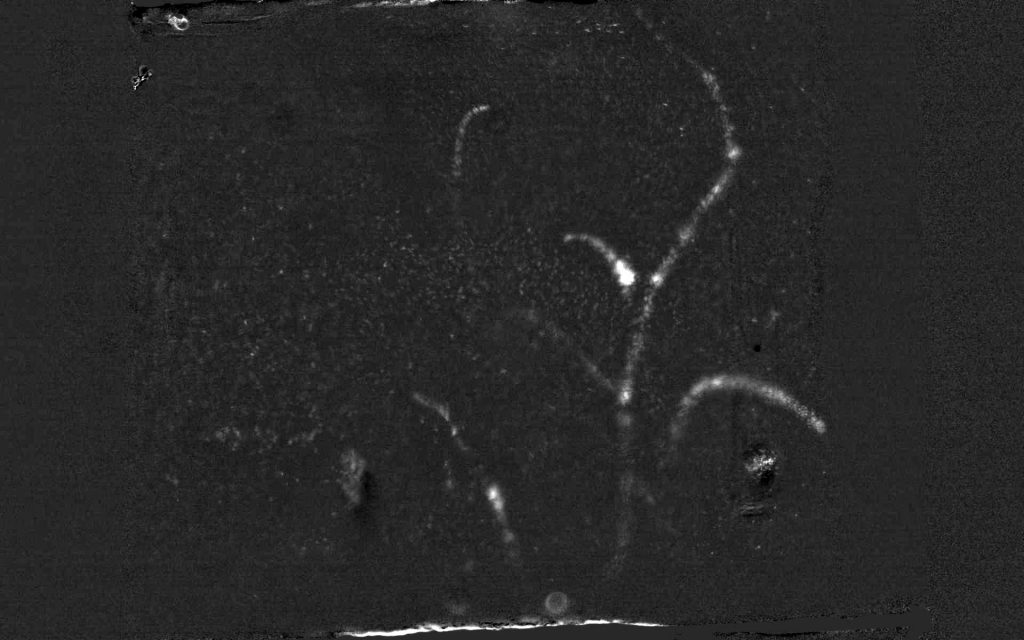
Tracks that appear to branch can be indicative of collisions occurring within the chamber.

Long straight tracks can be Muons generated in the earth’s atmosphere by very high energy cosmic rays.
It’s an interesting thing to build and get into with a lot of resources available. Some sites are