
During October my Wife and Myself travelled to Stratford-upon-Avon for a couple of days sightseeing and to see a play at the Royal Shakespeare Company. By coincidence Viezu have their workshop a couple of miles down the road so it would have been rude not to let them have the car to tune to stage 2 while we didn’t need it.
We kept the modifications relatively limited. Smaller upper super charger pulley and 200 cell catalysts. Taking one at a time.
Supper Charger Pulley
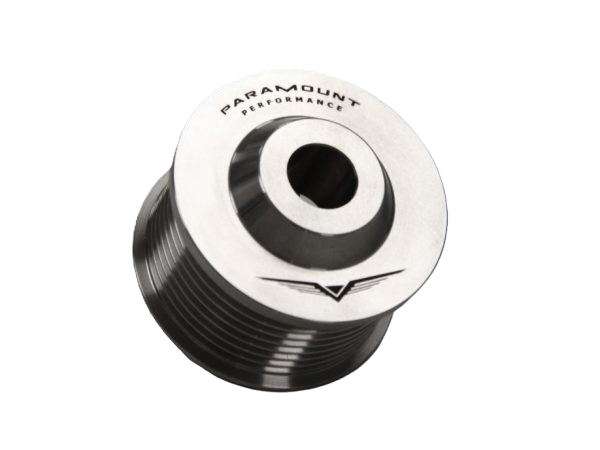
The smaller pulley causes the supercharger to spin faster pulling in more air. However you apparently cant go too much smaller with this pulley as the drive belt will start to slip. So we should have about a 5% increase in super charger speed. Before the swap the car was reporting 12.4 PSI as max boost pressure under full acceleration. Afterwards it was showing 13.7PSI which is a 10% increase but all figures have a margin of error.
| PULLEY SWAP | FIGURES |
|---|---|
| SUPER CHARGER SPEED | about a 5% increase |
| MAX BOOST, BEFORE | 12.4 PSI as max boost pressure under full acceleration |
| MAX BOOST, AFTER | 13.7PSI |
| INCREASE | a 10% increase but all figures have a margin of error |
Catalytic Converter Change
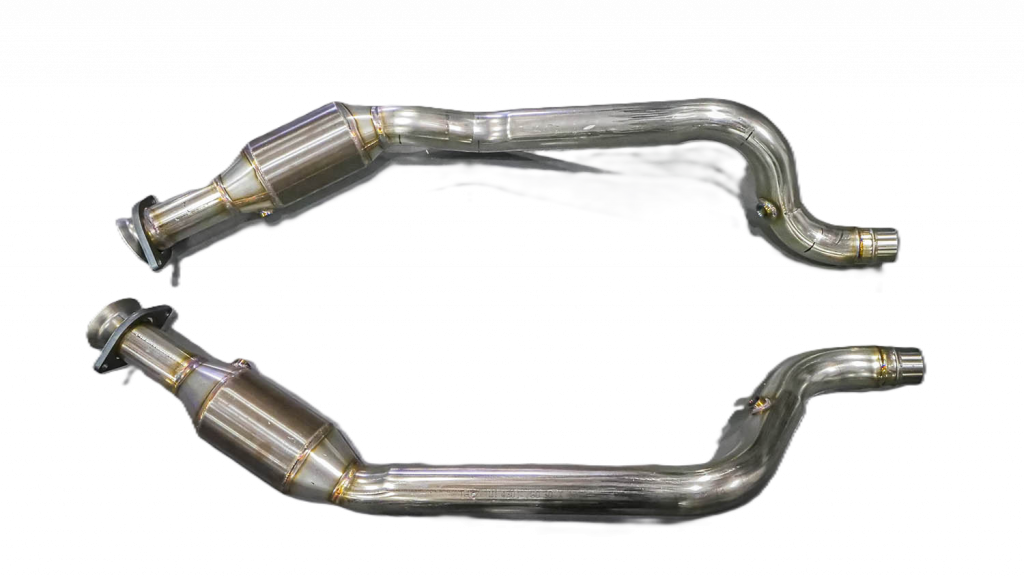
The 200 cell catalysts are a bit more involved. The first F-Type had standard catalysts that could be damaged by unburnt fuel entering the exhaust. After a software update later F-Types did not suffer from this problem but did lose some of the drama from the exhaust sound. Moving forward a few more years to 2021 and the catalysts were changed to gasoline particulate filter (GPF) versions. These are ceramic cored devices where the gasses flow have to flow through the pores rather than just along tubes coated in the catalyst. The results being more restriction and a much more muted exhaust note. Also the GPF versions are even more susceptible to damage if any unburnt fuel was to get to them.
So changing to stainless steel catalysts improves flow and sound while also allowing tuning that included pops and burbles. All while meeting UK standards.
The results from the dyno
Anyway after seeing a very civilised play and having a nice meal the car was ready to be collected. The people at Viezu treated us very well and we got to see the car on their dyno. In some ways the HP increase to 650 was relatively modest though better than I expected. The big difference is in the torque that rather than falling away rapidly after 4800 rpm, as with a standard remapped P450, held on and hardly decreased up to 6000 rpm.
| THE DYNO | RESULT |
|---|---|
| HP | increase to 650, relatively modest though better than I expected |
| TORQUE, STANDARD REMAPPED P450 | falling away rapidly after 4800 rpm |
| TORQUE, STAGE 2 | held on and hardly decreased up to 6000 rpm |
Looking at 0-60 MPH acceleration times as recorded by CarScanner and the OBD reader.
Also we now had the drama from the rear of the car similar to the original F-Types.
Final note. I felt the need to keep hold of the original catalysts. Both these and two overnight bags fit comfortably in the back of the coupe. Who could say it’s not practical!